The Rosete Squad Grid: Explaining Flamurtari to Your Fantasy Football-Obsessed Coworker

Every Flamurtari supporter in America has that one coworker. You know the guy — he's got three fantasy football teams, he drafts in April for a season that starts in September, and he once spent forty minutes explaining why his tight end situation is a 'crisis.' He thinks soccer is a sport where 'nothing happens.'
Here's the thing: he's not hopeless. He's just bilingual in the wrong language. So instead of arguing, we're going to translate. Fantasy football managers already understand squad-building, matchup nightmares, and franchise players. They just need the vocabulary flipped from red-and-black to gridiron.
The Franchise QB: Your Goalkeeper, Obviously
Think about what makes a franchise QB valuable in fantasy terms: consistency, high floor, and the ability to single-handedly steal you a week. That's your starting keeper. When the defense is getting carved up, the goalkeeper is the guy keeping the score respectable — the difference between a blowout loss and a one-goal heartbreaker you can live with.
The best Flamurtari keepers in club history played the position the way a good QB manages a game: calm, commanding the box like a huddle, and occasionally making the highlight-reel play that swings the whole match. If your coworker understands the value of a QB who never turns the ball over, he understands a keeper who never flaps at a corner kick.
The Feature Back: Your Striker
Every fantasy manager wants the workhorse running back — the guy who gets 25 touches a game and scores whether the team is up or down. That's the striker. The center forward is the focal point of everything, the volume king, the guy whose stat line (goals) is the simplest and most valuable number in the sport.
When Flamurtari have a striker in form, the entire attack runs through him, exactly like an offense built around its bell-cow back. And just like running backs, strikers are streaky. A three-match drought is a slump; a brace against a top side is your RB1 going off for 30 points. Sell high, buy low, and never panic in September.
The Shutdown Corner: Your Best Defender
In fantasy football, defenders are usually an afterthought — until your league scores them properly, and suddenly the elite ones are league winners. Same energy in soccer. The top center-back on the roster won't show up in the highlight reels the way a striker does, but watch him over a full match and you'll see it: he erases the opponent's WR1, the danger man, the guy who's been terrorizing everyone else all season.
A great center-back doesn't get a sack stat. His stat is that the other team's star finished with zero goals and a bad attitude. That's a shutdown corner with a clean sheet bonus.
The Deep Threat: Your Winger
You know the guy in fantasy who's rostered purely because he catches two 40-yard bombs a season? That's the speedy winger. He might disappear for seventy minutes, drift out of the game, frustrate you to death — and then hit one run down the flank that ends in a goal and wins you the week.
Wingers are boom-or-bust flex plays. You don't start them for consistency. You start them for the highlight. Flamurtari's wide attackers in the modern era have lived exactly in this mold, and honestly, that's half the fun of watching.
The Offensive Line: The Midfield Engine
Here's where your coworker's knowledge actually transfers better than he'd expect. A dominant midfield trio is the soccer version of an elite O-line plus a great receiving tight end — nobody notices them when they're good, and everybody notices when they're not. They control possession (time of possession, anyone?), win the physical battles, and dictate tempo.
If Flamurtari's midfield is winning, the team is 'controlling the line of scrimmage.' If it's losing, the striker's getting starved of service and the defense is on the field all day. It's the same cause-and-effect chain he already screams about on Sundays.
The Rookie With a WR1 Ceiling
Every fantasy league has a hype train, and Flamurtari's academy produces them too. The young talent coming through the ranks is the second-round rookie — unknown, cheap to acquire (in loyalty terms), and capable of becoming a superstar. Following a prospect from the youth setup to the first team is the soccer equivalent of stashing a late-round sleeper and watching him pop.
Your Printable Cheat Sheet
Copy this onto one page and post it wherever skeptical sports fans gather:
- Goalkeeper = Franchise QB — high floor, steals games, blame magnet
- Striker = Feature Back — volume scorer, streaky, simplest stat that matters
- Center-back = Shutdown Corner — erases the opponent's best player
- Winger = Deep Threat — boom-or-bust, highlight machine
- Midfield = O-Line + TE — controls tempo, invisible when good, obvious when bad
- Academy prospect = Rookie sleeper — stash him, watch him pop
- Clean sheet = Win + shutout bonus
- The derby = rivalry week, every week it's scheduled
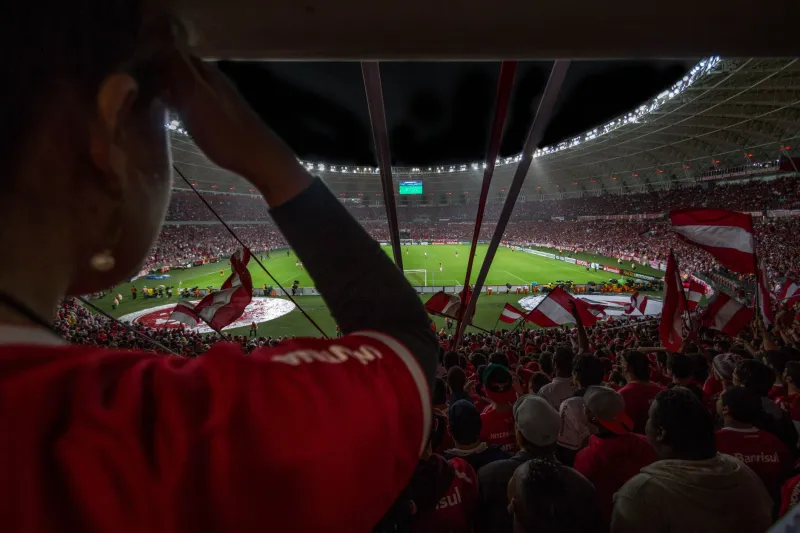
The last line matters most. Once your coworker understands that Flamurtari vs. a big rival carries the same electricity as a divisional playoff game, the translation is done. He came for the fantasy math; he'll stay for the smoke, the drums, and the feeling that ninety minutes can break your heart.
That's how you convert one. Then hand him a scarf and tell him there's no waiver wire for loyalty.