The Night Vlorë Shook Europe: Flamurtari's 1987 Run and Why America Never Got the Memo
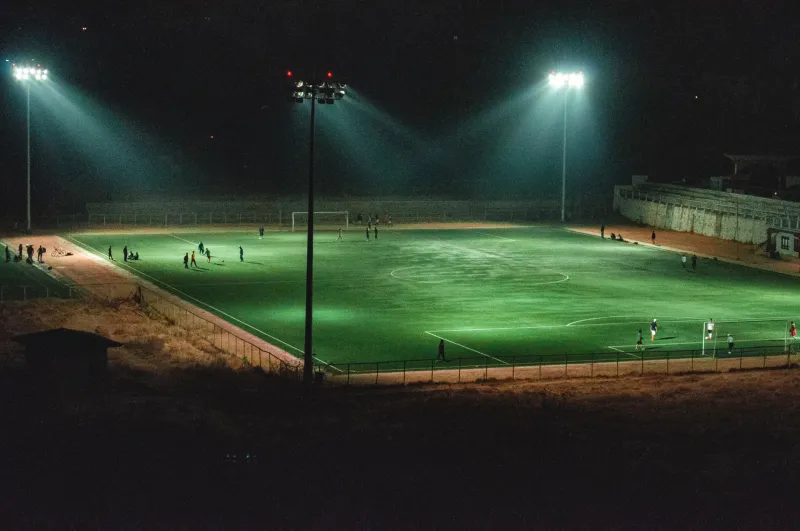
Every country has its miracle. America has the 1980 hockey team beating the Soviets in Lake Placid. England has Leicester City winning the Premier League at 5,000-to-1 odds. But there's a Cinderella story from the same era as the Miracle on Ice that most American fans have never heard — and it's arguably the wildest of them all.
In the autumn of 1987, a club from a small port city in communist Albania didn't just compete in Europe. They made Barcelona, one of the biggest institutions in world soccer, fight for its life.
The Setup: David, But With Worse Equipment
To understand how absurd this run was, you need the context. In 1987, Albania was one of the most isolated countries on Earth — a hardline communist state where players couldn't freely leave, resources were scarce, and training conditions would make a college program blush. Flamurtari FC, from the coastal city of Vlorë, qualified for the UEFA Cup against teams with modern facilities, professional contracts, and decades of European experience.
The squad was made up of local players, many of them essentially amateurs by Western standards. Guys who worked other jobs. Guys who trained on worn pitches with aging equipment. And yet, when the draw came out, nobody in Vlorë seemed worried. Maybe that's the most Albanian detail of the whole story.
Barcelona Comes to Town
Flamurtari's European campaign that season became the stuff of legend. They dispatched opposition with a swagger nobody saw coming, and then the draw delivered the heavyweight: FC Barcelona, with a squad stacked with international stars.
When Barça arrived in Vlorë, Stadiumi Flamurtari became a cauldron. The crowd — packed, deafening, running on pure belief — dragged their team forward. Flamurtari beat Barcelona at home, 2-1, in front of disbelieving eyes across Europe. Read that again. A part-time squad from communist Albania beat Barcelona. It wasn't a friendly. It was a competitive European tie, and the underdogs won it.
In the return leg in Barcelona, Flamurtari fought to the bitter end. The tie ultimately slipped away, but the point had been made: this little club from the Adriatic could go toe-to-toe with anyone. The Camp Nou crowd, to their credit, recognized it — reports from the era describe Barcelona's own supporters applauding the visitors as they walked off.
That respect, from the opposition's fans, in their own cathedral? That's the stuff of legend.
Why America Should Care
Here's the thing: American sports culture is practically built on the underdog narrative. We made a movie about the Miracle on Ice. We canonize the 2007 Giants beating the undefeated Patriots. Leicester City's title run got wall-to-wall coverage on American sports networks. We eat this stuff up.
So why doesn't Flamurtari 1987 get the same treatment? Probably a mix of factors — the Iron Curtain made coverage difficult, archival footage is scarce, and Albanian soccer simply wasn't on the American radar. But the story checks every box: tiny club, hostile political backdrop, impossible odds, a giant slain at home, and a farewell that earned respect from the mighty themselves.
It's the kind of tale that, if it happened in a more marketable league, would have a documentary on a major streaming service by now.
The Legacy in Vlorë
Talk to anyone in Vlorë over forty and they'll tell you where they were during those European nights. The 1987 squad remains sacred ground in club lore — the players are legends, their names spoken with a reverence that transcends generations. The club's identity, its stubbornness, its refusal to be small, all traces back to that season.
Every time Flamurtari pulls off a result against a bigger club, the ghost of '87 is in the stands. Every away side that walks into Stadiumi Flamurtari and hears that noise is feeling the echo of the night Barcelona came to town and left shaken.
Keeping the Flame Alive
As fans, part of our job is storytelling. The great runs and great nights only live if we keep telling them — and 1987 is a story that deserves to travel. So here's our ask: the next time someone in your group chat brings up Leicester or the Miracle on Ice, tell them about a team from a city most Americans can't pronounce, in a country that barely appeared on maps, beating Barcelona.
Because miracles aren't just for the famous. Sometimes the best one happened on the Albanian Riviera, and almost nobody was watching. We're here to change that.
Forza Flamurtari — today, tomorrow, and always back to 1987.